
Significance of Arc Flash Risk Evaluation and Mitigation Techniques - Carelabs Philippines
Home / Our Blogs / Significance of Arc Flash Risk Evaluation and Mitigation Techniques
Significance of Arc Flash Risk Evaluation and Mitigation Techniques
Our Newsletter
For weekly blog entries on our services and how we are changing the world, subscribe to our mailing list by filling out the form below.
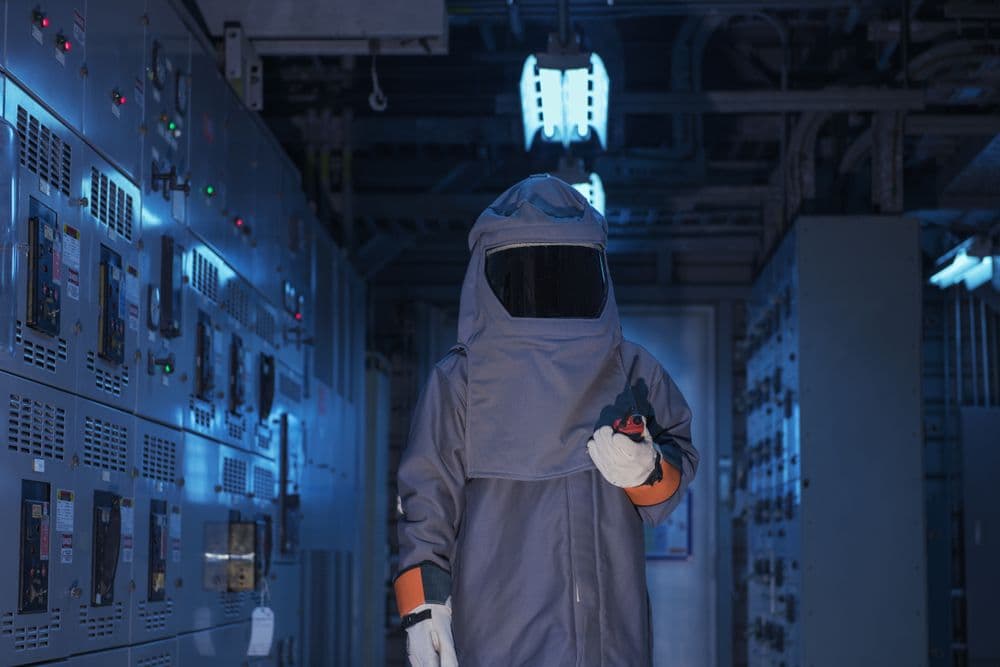
When a gas is exposed to a voltage larger than its capacity to block, electrical arcs can form. When the voltage between the conductors is sufficient to ionize the air between them, an arc form. When ions are introduced to the air, the air becomes a good conductor of electricity. Air ionization produces a current that heats and lights the air. This heat causes the ionized air to rise, generating a stream in the shape of an arch. Therefore, the phenomenon is called an arch current. An arc flash is capable of producing temperatures as high as 20,000 degrees Celsius.
Arc flash risks pose a threat to both people and property. Among the advantages of arc in flash for businesses are:
- Direct expenses include medical care, rehabilitation, worker compensation, the cost of investigating the incident, and lost productivity.
- Indirect costs include legal and judgement expenditures, litigation costs, fines, insurance premiums, repair fees, and the cost of hiring a substitute worker.
- When undesirable events occur, they can hurt your image, make it harder to get employment, and even result in criminal charges.
- Most consumers will not connect with businesses that have a high number of accidents, resulting in lost income and the revocation of an electrical license.
- Mishaps involving the use of an electrical circuit Flash leaves an impression, which can lead to missed chances and wasted money.
Where Do Arc Flash Dangers Originate?
- Using the test probe on the improper surface
- Unsuitable equipment, installation, and work methods
- Utilizing inferior electrical components
- Insulation damage or equipment gaps
- Conflict with the disconnect panel
- Dust on electrical equipment or corrosion
- Lack of adequate maintenance of circuit breakers and switches
- Exposure of vital organs to the outdoors or fraying connections
- Wires carrying high voltage or a steady power source
- Dampness in electrical equipment
Methods for Decreasing the Risk of an Arc Flash:
Deactivating electrical components:
It minimizes dangers as much as is practicable. Work should not be conducted on electrified equipment, and great care should be taken while testing the equipment after it has been de-energized or after it has been re-energized. The use of remote tracking prevents circuit breakers from being too close to arc flash boundaries, which might endanger the worker using them.
Utilize technologies that pose less risks:
Arc flash analysis and power system studies are conducted to assess the risks involved with short circuits and the interaction of protective devices. Utilize low-threat alternatives, such as remote rack equipment, to protect people and property.
To replace electrical and control systems:
Verify the availability of the necessary level of PPE (personal protective equipment) based on the intensity of the arc flash. Engineering techniques and tools are being changed to make them safer. Circuit breakers and energy distribution systems are meant to restrict the flow of energy.
Reduce the fault current available:
By employing non-current limiting breakers, industries will be able to reduce the quantity of available fault current. During maintenance, these goods can be utilized with an open tie. During maintenance, the opening connection between dual power supplies reduces arc flash risks by limiting available fault current. During arc faults, current-limiting reactors can be utilized to stop the flow of electricity.
Change the energy of the blast:
Promote the utilization of arc-resistant materials. Arc-resistant switchgear transmits the energy and heat released by arc flashes through ducts to an unoccupied area. This is accomplished by utilizing sealed joints, pressure relief vents on the top, and stronger hinges. CareLabs offers a vast array of investigation and analysis services for arc flashes. Experts investigate arc flash dangers to verify that your safety program is current. CareLabs can identify potential arc flash dangers and minimize them using innovative technology. ETAP (Electrical Transient Analysis Program) software is utilized for research and analysis in CareLabs.
CareLabs employs crew members in many places to guarantee that our specialists are close by in case of an emergency or routine work. CareLabs has rapidly established itself as an ISO 9001:2008-accredited company with a strong reputation and a lengthy list of satisfied clients. CareLabs offers arc flash testing and analysis in all the major cities of Philippines, including Manila, Quezon, Davao, Caloocan, and Cebu.
Our Newsletter
For weekly blog entries on our services and how we are changing the world, subscribe to our mailing list by filling out the form below.
Our Services
Slide
Slide
Slide
Slide
Slide


Related Posts
- Relay Coordination Study
- Short Circuit Analysis
- Load Flow Analysis
- Arc Flash Study
- Analyze and Assess Electric Motor Performance in Compliance with Philippines Legislation
- How Can the Performance and Dependability of Commercial Motors Be Assessed?
- The Study of the Power System Looks at Relay Coordination, Short Circuits, and Load Flow
- The Importance of Load Flow and Short Circuit Analysis for Philippine Companies
- How to Perform a Study of Power Quality in Philippines?
- Power Quality Working Principles in Philippines
Leave a Reply Cancel reply
Need Expert Electrical Safety Support?
Carelabs provides arc flash studies, power system analysis, and Philippine Electrical Code compliance services across Philippines.