ELECTRICAL COMPLIANCE INSPECTION
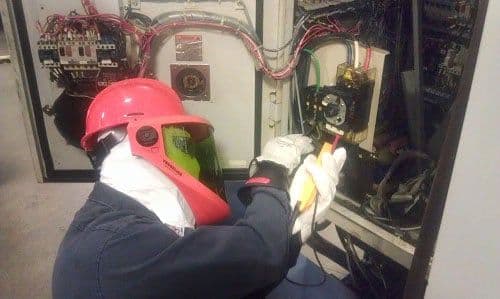
OSHA has established a direct correlation between effective management of worker safety and health protection and the incidence and severity of employee injuries. OSHA maintains that effective management helps eliminate or control employee exposure to toxic substances and other unhealthy conditions. It enriches employee confidence and productivity and decreases workers payment and other less apparent expenses of work-related injuries and illnesses.
Why is Electrical Compliance Inspection Needed?
Electricity, just like water and gas, can leak. This leakage current is potentially dangerous as it can flow through you when you touch the leaking appliance. The earth leakage relay is designed to monitor for leakage current going directly or indirectly to earth and if it exceeds a certain value it will trip and disconnect the current flow. This is why it is so important that all circuits are properly earthed to ensure that the earth leakage relay would operate in an emergency.
The responsibility has been placed on the owner to ensure that a faulty or non-compliant electrical installation in his / her property does not pose a threat through fire or electrocution to any person, animal or property. Without a valid compliance certificate, should an injury or incident occur, the owner could be held liable and the insurance on the property could be declared invalid?
What is Done During Electrical Compliance Inspection?
Part of our responsibility is to
- Ensure that all the safety features and functions of the electrical installation are functioning correctly.
- What should be earthed is earthed and that the earth leakage relay is operational and trips accordingly.
- If your earth leakage or circuit breakers are tripping it’s actually a good sign, it means your electrical installation is doing what it should be doing, I would be more concerned if you NEVER have tripping problems. It could be a faulty appliance or circuit. Very often what happens over the years is that safety features go faulty, are deliberately disabled or by passed to “fix” a tripping problem instead of the actual fault being traced and rectified properly.
As part of our process of issuing a certificate after compliance inspection we replace faulty safety equipment and re-enable all the safety features and then suddenly that existing faulty circuit or appliance starts causing the earth leakage relay to trip when next used and the natural assumption is that we have somehow created a fault. What also happens is a new faulty appliance which now causes the earth leakage to trip in property. Overloading is not a certificate issue, the owner may need to upgrade the installation.
A compliance certificate will be given after inspection that covers the permanent electrical installation which includes:
- All the cables from the mains incoming point to the main distribution board;
- Everything in the main distribution board and any sub boards, circuit breakers, earth leakage etc. ;
- All the cabling from the distribution boards to switches and plugs, including the wall plugs and light switches, through to the connection at the lights;
- All circuits and wiring to any fixed appliances, even if they are plugged into a wall socket, but it does not include the actual appliance itself;
- The earthing system and connectivity throughout the installation;
- Positioning of electrical equipment, e.g. light switches and plugs may not be within a certain distance of taps, shower, baths etc.;
- Mains switch must be accessible and a within a certain height from the floor in case of emergencies;
- All electrical equipment in the installation must be approved, SABS or other relevant approvals, and be of the correct type and rating for the application;
- All electrical equipment must be installed in an approved manner, must be securely attached in place and suitably protected from little fingers gaining access;
- All parts of the permanent electrical installation must be in good working order, including safety features;
- The electrician will also take various readings to ensure that voltages, insulation, earthing and other values are within requirements.
How is electrical Compliance Inspection Done?
A proper inspection program is a key tool management can use in its efforts to establish and maintain an electrical safety program. The OSHA of 1970 requires the employer to provide a safe and healthful workplace for every working man and woman. The General Duty Clause, in OSHA needs every employer to provide his/her employees a place free from hazards that cause shock or arc flash. It also requires the employer to comply with occupational safety and health standards promulgated under the OSHA. To accomplish this, the employer can carry out a self-assessment or inspection program to make sure electrical systems and equipment are correctly installed, designed, functioned and maintained in a safe and consistent condition.
Fulfilling these rules and regulations will make sure employers are fitting and maintaining electrical systems and equipment in proper and safe working condition as well as confirming employee’s perform safe work and also back supervisors and managers in fulfilling electrical safety goals set forth by the company for regulatory compliance.
- Employee implementation of the electrical safety program, which includes:
- Understanding the program.
- Identify how much supervision emphasizes the program.
- Describe the condition of the program.
- Does the electrical safety program address all hazards (e.g., determines if employees are exposed to other risks not addressed in the program)?
- The audit must address the process for revising procedures as needed, including:
- Where incidents or injuries occur, a review of procedures must take place.
- Procedure revisions or a new procedure may be needed.
- Define how procedure revisions are communicated to employees.
The inspection and audit programs should be carried out by an electrically knowledgeable, qualified person in order to identify deficiencies in electrical equipment or systems and to correct or properly document any deficiencies found.
An option to make sure the inspection program is on board is to have electrically skilled safety personnel perform the inspections. Another way is to contact a third-party electrical inspection company. Using a person from outside the company or facility will often lead to discovery of issues and deficiencies that may be overlooked by self-inspecting.
The written electrical safety inspection program should be reviewed on a periodic basis by electrically qualified persons to ensure that checklists are current and being used. Inspections should include a review of the entire electrical safe work program for energized and de-energized work, which includes the energy control or lockout/tagout program. Written work practices, PPE, and the condition/maintenance of installed electrical equipment and systems should be inspected for compliance with regulations and industry consensus standards.
The inspection and audit programs should be carried out by an electrically knowledgeable, qualified person in order to identify deficiencies in electrical equipment or systems and to correct or properly document any deficiencies found.
Benefits of Electrical Compliance Inspection
For owners, having a certificate of compliance safeguards that the rental house or facility meets government recommended guidelines for electrical safety. This gives possible tenants confidence and peace of mind, which will be good for business.
Stiff fines may be imposed to responsible landlords or home-owners for violations of these electrical safety rules in the unfortunate event of an incident involving an electrical failure. A court can charge a responsible landlord with six months’ imprisonment and additional criminal charges for the offender in the event of an electrical incident that leads to personal injury or worse, death. This highlights the benefit of regular checks and certification of compliance for electrical safety as it prevents accidents and other unfortunate incidents.
Get Started
Need expert support?
Carelabs delivers arc flash studies, power system analysis, and DEWA compliance services across the UAE.